Fridge is not cooling
A control issue, restricted heat-exchange surface, fan fault or sealed-system problem may be responsible. Poor cooling does not always mean compressor failure.
THE REPAIR & CARE JOURNAL
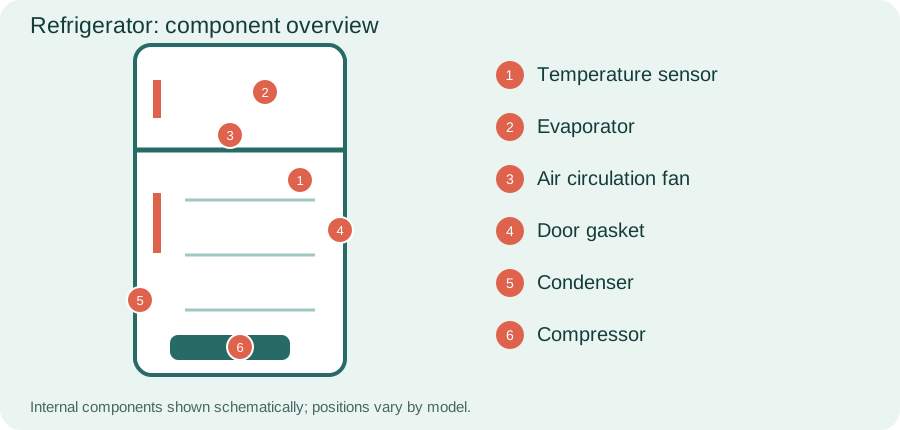
Understand the main components of your refrigerator, the user checks you can make and when to stop and call for help.
Monday–Sunday, 8 AM–8 PM · Visits from ₹500
Follow recommended temperature settings, separate raw and ready-to-eat food and allow air circulation. Minimise unnecessary door opening. If cooling fails, protect food promptly rather than waiting for service.
Keep the product manual and model reference where you can find them. Different programmes, accessories and maintenance procedures apply to different models, even within the same brand. Follow the instructions supplied with your appliance.
Clean seals gently, keep ventilation clear according to the manual and avoid placing hot containers directly inside. Defrost manual-defrost models using the manufacturer's procedure. Do not use a knife to remove ice or pull the appliance by its pipes.
Before routine cleaning, stop the appliance and follow its isolation and cooling instructions. Do not remove fixed protective panels. If a task is not described as user maintenance in the manual, arrange professional help.
A control issue, restricted heat-exchange surface, fan fault or sealed-system problem may be responsible. Poor cooling does not always mean compressor failure.
Restricted air passages, ice buildup or a failed fan may stop cold air reaching the fresh-food compartment. Never chip ice with sharp tools.
A blocked drain, door left ajar or damaged gasket can create moisture problems. Note where water first appears and whether doors close fully.
Starting components, temperature settings, door sealing and cooling-system faults affect run time. A technician can distinguish normal cycling from a fault.
A refrigerator assessment considers temperatures, seals, fans, defrost behaviour and compressor starting. Sealed-system work needs diagnosis of any leak or restriction and the correct refrigerant. Ask whether the estimate includes related components and testing. Move perishable food to suitable cold storage when cooling fails.